-
Revisiting Vitex Agnus Castus: Woman’s Best Friend
Vitex is a member of the Lamiaceae family. It can grow to an impressive tree with beautiful purple flowers. Its vernacular names Chaste Tree and Monk’s Pepper already hint at its main area of interaction with the human organism: The endocrine system. How Vitex essential oil became an aromatherapy staple For hundreds of years the… Continue reading
-
Turmeric CO2, Organic and Javanese Turmeric CO2
Turmeric has conquered the world in the form of Curry Powder. It has an very long history in the cultures of Asia, especially India. This history has inspired many modern uses. The health benefits of Turmeric have become so widely known and respected that Turmeric supplements are among the most popular in every health food… Continue reading
-
Rare Finds: Sage petite feuille
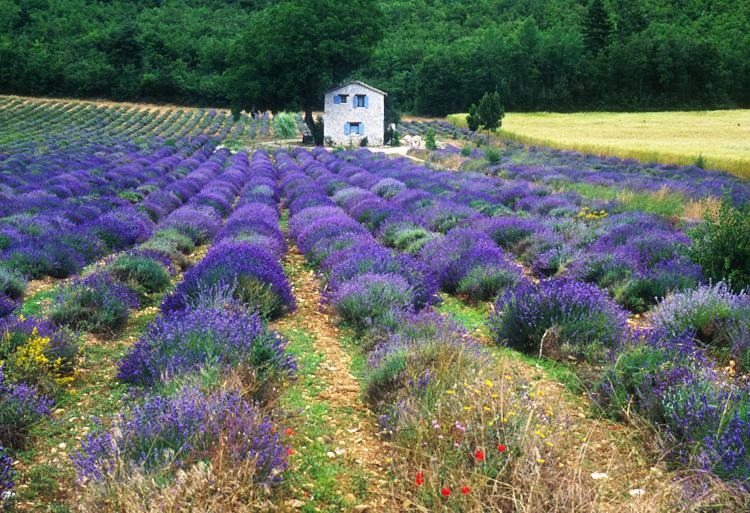
Sage petites feuilles or also Salvia gallica: The Riddle that Improves Memory Function Sage petites feuilles is cultivated and harvested exclusively from the field in Haut Provence (pictured above) by one of our most distinguished distillers. To the best of our knowledge our Sage petites feuilles is the only low ketone Sage cultivated according to… Continue reading
-
How to Use Antiviral Essential Oils, Commonsense Caution
Essential Oils do work for Viral Issues, but if one is new to oils one should be guided by some commonsense cautionary considerations. First the question, how meaningful are the in vitro studies that show efficacy of oils against viruses. A meaningful answer is again guided by commonsense. If it is easy to apply the… Continue reading
-
MY FAVORITE OILS
Often I get asked, what is your favourite oil. And I think about it and cannot really come up with an answer. So I thought some more about it and arrived at the following. There are oils I use more than others and there are oils I gravitate to. Typically these are staples as one… Continue reading
-
Blends for the Boys
Have you followed how a large retailer was taken over by an even larger retailer recently. It appeared that all the green vegetables that previously were almost always crisp and refreshing had all of a sudden been left to themselves to come across a bit wilted. And the Avocados, that once were proudly displayed as… Continue reading
-
Chemotypes of Thyme
Reposted from 2011 One of the better known phenomena of the Thyme essential oils from Provence is summarized by the term “Chemotypes.” The most popular is probably so-called Thyme linalool. This is aromatherapy shorthand for essential oil of Thymus vulgaris, type linalool. It indicates that this particular oil contains a high concentration of the terpene… Continue reading
-
Essential Oil Stories
NOSTALGIA As we look back at the essential oils that caught extra attention this year I think of the Butterbur as a new entry to our repertoire and I also think of the shortages that were a telling event in 2016 aromatherapy. While the Cape Chamomile and Moroccan Chamomile shortages were certainly the ones most… Continue reading
-
The Moroccan Camomile Shortage
Essential Oil Stories The increased popularity of essential oils has had interesting yet not always intended consequences. One of the phenomena we observed is that authentic oils are becoming more scarce. Or as one would say in more technical terms supply chains are becoming strained or even exhausted. I remember the first time this happened… Continue reading
-
Mistral over Lavender
For a brief impression of the strong Mistral that blew on a day or two of the PIA Provence excursion please click below MOV_1862.MOV The 2016 Harvest. Special Offers Reporting back from distilling Helichrysum in Corsica and the PIA Provence 2016 Journey we would like to thank all the participants for riding along and contributing… Continue reading
Kurt Schnaubelt, Ph.D.
Home of Dr. Kurt Schnaubelt's Personal Blog